


Manufacturers depend on steady material flow. Parts need to arrive in the right place, in the right orientation, at the right time and with the right information attached to them. When that flow depends too heavily on manual handling, operators often become responsible for more than production. They’re expected to move materials, check components, identify errors, maintain pace, prevent defects and keep the line moving.
That creates pressure on people, equipment and production schedules.
Envision Automation designs custom material handling automation solutions that help manufacturers improve production flow, reduce labor strain and create more reliable packaging and assembly processes. From small lean cells to fully integrated production lines, Envision Automation tailors systems around the work happening on the floor, helping customers move parts more consistently and make better decisions throughout the process.
Moving Parts Is Only Part of the Challenge
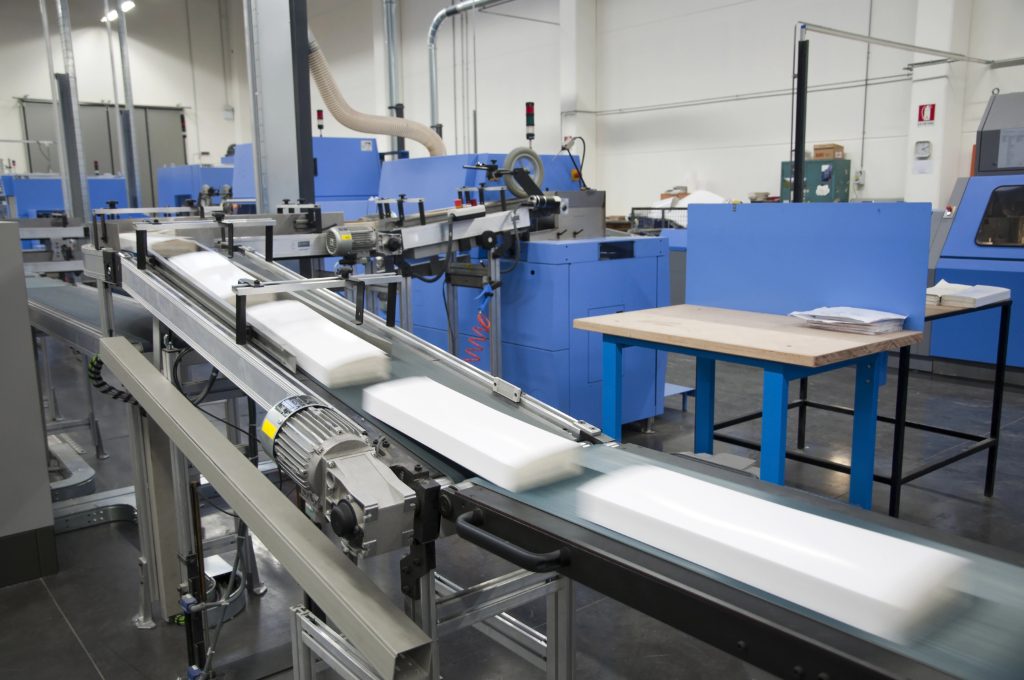
Material handling is often thought of as the simple movement of parts from one station to the next. In reality, effective material handling involves much more than transfer.
Our manufacturing customers need to know what material is being handled, where it came from, where it needs to go, which process comes next and what information needs to follow that part through the line. That can include part recipes, process schedules, component tracking, routing requirements and quality data.
When that information is missing or disconnected, bottlenecks form quickly.
A line can slow down because the wrong components arrive at a station. A part may need to be rotated before the next operation can begin. A barcode may need to connect the part to its recipe, inspection data or downstream process. Operators may have to stop and manually verify details that an automated system could track, route and confirm.
Envision Automation helps manufacturers solve those problems by designing custom systems that align movement, data and process control.
Material Handling Systems for Your Production Environments
Every Envision Automation project is built around our customer’s product, process, space, production goals and quality requirements.
That may include a compact lean cell the size of a desk, a larger automated assembly station or a full-scale packaging and production line. Envision Automation commonly works with manufacturers in industries such as automotive, energy, food and medical production. Each industry has different requirements, but many face similar challenges around part movement, component handling, packaging flow and operator workload.
Some systems support manual loading. Others are fully automated. Many combine operators, conveyors, sensors, robotics, lift assists, pick-and-place tooling, vision systems and controls into one coordinated process.
How Material Handling Automation Supports Packaging & Assembly
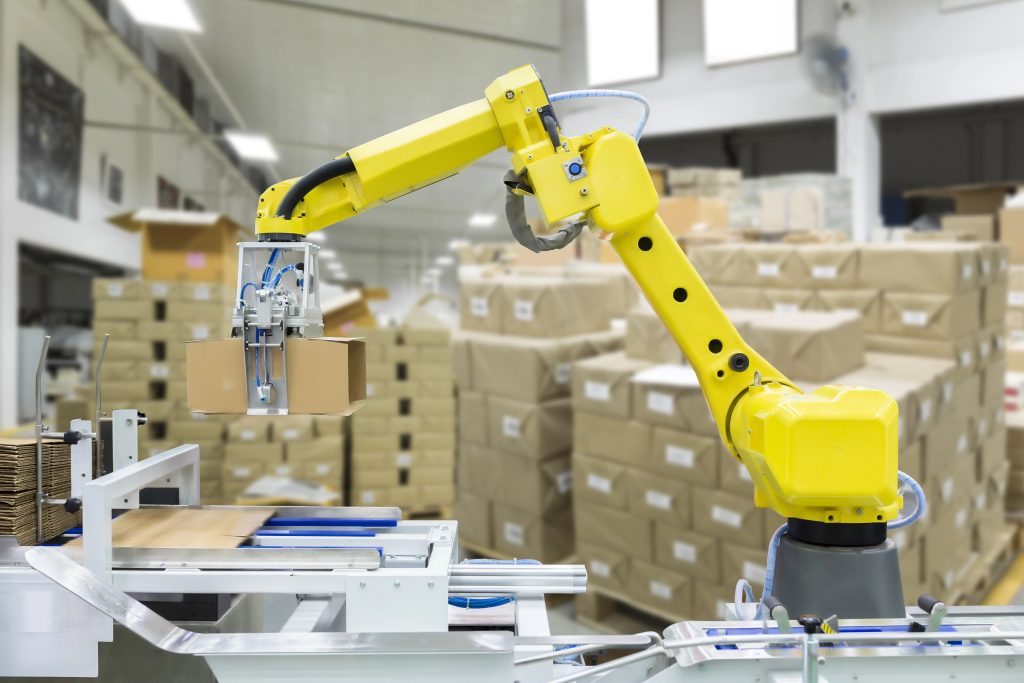
Packaging and assembly lines depend on timing. If parts arrive late, arrive incorrectly or require too much manual adjustment, the entire line can suffer.
Material handling automation helps connect individual stations into a smoother process. Parts can be moved, oriented, verified, loaded, assembled, tested, labeled, packaged and routed with less interruption.
A custom system may include:
- Conveyors and Transfer Systems
- Pick-and-Place Tooling
- Lifts and Lift Assists
- Robotics and Servo-Controlled Motion
- Vision Systems and Sensors
- Controls and Data Tracking
Automation Helps Catch Errors Earlier
Manual production often depends on operators seeing what is right and wrong. Skilled operators are valuable, but even experienced people can miss details during repetitive, fast-moving processes.
Our automated solutions can help shift error detection from visual judgment to controlled verification.
When equipment is designed to check for the right conditions, customers can catch more problems before they become expensive. A missing component can be identified before the next assembly step. A misoriented part can be stopped before it enters a fixture. A failed weld, torque reading or leak test can be routed out of the line before value-added work continues.
That’s crucial because some parts become too expensive to repair once they reach a certain point. If a bad part continues through the line, additional components, labor and processing time may be wasted before the issue is discovered.
By catching errors earlier, Envision Automation customers can reduce scrap, limit rework and protect production output.
Automation Can Improve Safety & Reduce Labor Strain
One of the largest hurdles manufacturers face is on-the-job injury. Repetitive motion, awkward lifting, constant reaching and hand tool use can lead to fatigue, stress and missed work.
Material handling automation can help reduce those risks.
A lift assist can make a heavy or awkward part easier to move. A tool balancer can reduce strain from repeated screwdriver use. A pick-and-place system can eliminate unnecessary reaching or twisting. A fully automated station can take over repetitive tasks that are difficult for operators to sustain across an entire shift.
These improvements are not only about comfort. They affect production.
When injuries, fatigue and repetitive strain are reduced, manufacturers are better positioned to keep people working safely and keep production schedules on track.
What Manufacturers Should Evaluate Before Automating Material Handling
Before investing in material handling automation, we encourage prospective customers to arrive at a clear understanding of the full part, the full process and the requirements that define a good outcome in their production environment.
The system should account for how the product is assembled, what components are required, what sequence must be followed and what quality standards need to be confirmed.
Important questions to consider include:
- What is the part and how does it need to be handled?
- What components are added and in what sequence?
- Does the part need to be rotated, lifted, transferred or oriented?
- Are fasteners involved?
- What torque or rotation requirements need to be confirmed?
- Does the part require leak testing?
- What defines a good part?
- What defines a failed part?
- Where should failed parts go?
- Is there a repair area or repair loop?
- How should repaired parts be reintroduced into the line?
- What data needs to follow the part through production?
For welds, the system may need to understand weld position, weld size and pass/fail criteria. For assembly, it may need to confirm part presence, fastener count, torque readings or component sequence. For packaging, it may need to manage labeling, product routing, count accuracy or final verification.
The more clearly these requirements are defined in advance, the better we can plan for an automation system to support our customer’s production.
Automation Is Only as Good as the Inputs
A common misconception is that adding a robot, servo system or vision system automatically guarantees a perfect part. Automation improves consistency, but it cannot correct every problem created by inconsistent inputs.
The quality of the output depends on the quality of the components entering the system.
If a part is out of spec before it enters the line, automation may not turn it into a good part. If a component changes material, color, finish or dimension, the system may need to be adjusted. Even a small change can affect how vision systems, sensors or tooling respond.
For example, a vision system may be trained to detect a bright aluminum part. If that part later arrives with a duller gray finish because the material formula changed, the system may no longer see it the same way. What looks like a minor purchasing or supplier change can create major production issues if the automation system was not adjusted for it.
That’s why consistency matters. Manufacturers need to understand how part changes, supplier changes and material changes can affect automated equipment.
Envision Automation helps customers think through those details so the system is designed, tuned and supported around real production conditions.
Streamline Your Line with Envision Automation
Manufacturers need practical systems that anticipate and solve day-to-day production problems.
Envision Automation designs and integrates custom material handling automation solutions that help our customers improve flow, reduce bottlenecks and build more reliable packaging and assembly processes.
From compact cells to large integrated systems, we help manufacturers move the right parts to the right place with the right information behind them.
Ready to improve material flow in your facility?
Contact Envision Automation to discuss a custom automation solution for your packaging or production line.