

In manufacturing, some mistakes are easy to spot after the fact. A missing component. A short shot in an injection-molded part. A barcode that will not read. A part loaded in the wrong orientation. A finish defect that makes it all the way through the line before someone catches it.
The problem is that by the time those issues are found, the cost has already started to climb.
Bad parts create scrap. Missed parts create rework. Incorrect loading can damage tooling, slow production or send defective products downstream. Manual inspection can help, but people get tired. They lose focus. They may not be able to keep up with the cycle demands of a fast-moving production line.
That is where vision systems can make a major difference.
At Envision Automation, we use vision systems to help manufacturers inspect, locate, verify, read and guide production processes with a level of consistency that’s difficult to maintain manually. The right system can help reduce scrap, improve yield, support automation and catch errors before they become larger production problems.
What Vision Systems Do in Manufacturing
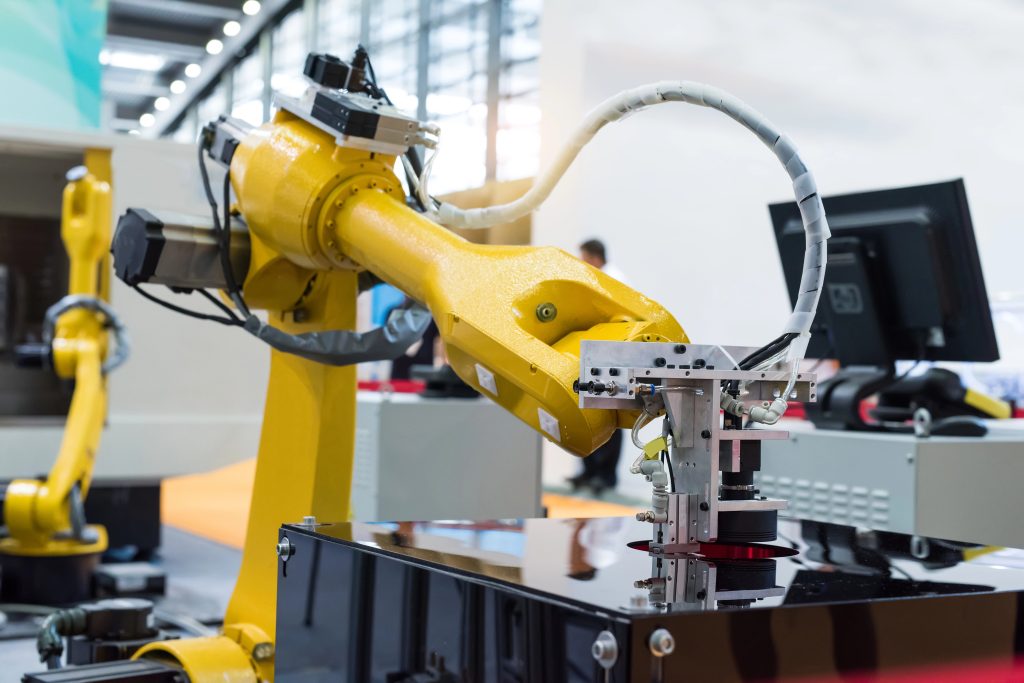
A vision system uses a camera, lighting, software and controls integration to evaluate what is happening in a production process. Depending on the application, that system may be used to confirm that a part is present, identify where it sits on a conveyor, inspect surface quality, read a barcode or verify that a component was installed correctly.
In some cases, the system is checking a simple yes-or-no condition: Is the part there? Is it facing the right way? Did the operator install the required component?
In other cases, the system may need to make more detailed inspections. It may be looking for out-of-spec dimensions, incomplete molded parts, bad finishes, pocket locations, shape locations, code markings or optical character recognition.
Our goal is to solve customers’ specific production problems with the right cameras, lighting, field of view, placement, programming and integration.
Common Production Problems Vision Systems Can Solve
Manufacturers are using vision systems to address a wide range of issues, especially in applications where speed, consistency and accuracy are critical.
Some of the most common uses include:
Part Location
Vision systems can determine where a part rests on a conveyor or within a work area. This is especially valuable for automated picking, placing, stacking or robotic handling.
A standard sensor may be able to tell that something is present, but it usually cannot understand position, shape, orientation or location in the same way a vision system can. When the system needs to know where a part is before the next action happens, vision becomes a powerful tool.
Missing Part Detection
Missing components are one of the most common sources of downstream quality issues. A vision system can confirm that each required part has been installed before the assembly moves forward.
This can help manufacturers avoid sending incomplete assemblies to the next station, packaging area or customer.
Injection Molding Inspection
In injection molding, vision systems can be used to detect issues such as short shots, where not enough plastic has been injected and the molded part is incomplete. They can also inspect for poor finishes or other visible defects that may affect quality.
Catching those problems early can help reduce scrap, isolate process issues and prevent bad parts from continuing through production.
Out-of-Spec Detection
Vision inspection can be used to identify parts that do not match the expected size, shape, orientation or feature location. This has applications across automotive, medical, food-grade, solar, battery, packaging and general industrial manufacturing.
Barcode & Character Reading
Some cameras can read barcodes, while more advanced systems can perform optical character recognition. That means the system can read printed codes, markings or writing on a part when simple barcode scanning is not enough.
This is useful for traceability, verification, sorting and quality documentation.
How Vision Systems Reduce Human Error
People are essential to manufacturing, but repetitive inspection and high-speed production create obvious challenges.
Human error often shows up when operators are asked to perform the same task over and over for long periods of time. They may load a part incorrectly, forget to install a component or miss a defect during inspection. They may also be asked to keep up with a pace that is difficult to maintain without fatigue.
That’s not a failure of the person. It’s a limitation of the process.
Our vision systems help by taking repetitive visual checks and making them consistent. The system does not get tired, distracted or overloaded by cycle demands. It can inspect parts the same way every time, at the speed the application requires, as long as the system has been designed correctly for that environment.
This can also reduce strain on employees. When vision is paired with automation, it can help limit repetitive motions, awkward handling and manual tasks that contribute to fatigue or repeatable injuries.
Vision Systems & Product Quality
Quality problems are expensive because they rarely stay isolated. One missed defect can create scrap, rework, downtime, customer complaints or warranty issues. In some industries, a missed quality issue can create serious compliance or safety concerns.
Our vision systems improve product quality by giving manufacturers a repeatable way to verify parts both during and after production.
A properly applied vision system can help:
- Reduce scrap by catching bad parts earlier
- Improve yield by confirming parts are made or assembled correctly
- Prevent incorrect parts from moving downstream
- Support faster inspection without relying only on manual checks
- Improve traceability through code reading and part verification
- Give operators and maintenance teams clearer information when something goes wrong
For example, in a simple pick-and-place application, a vision system can confirm that the required component is present and properly located before the next step occurs, directly reducing scrap as the process is no longer relying on assumption.
Throughput Depends on the Application
One common question manufacturers ask is how fast a vision system can run.
The answer depends entirely on the application.
Some vision systems inspect parts at very high speeds. In one part instance, a system may need to evaluate 180 parts per minute. In another application, the process may involve a much longer cycle time, even up to an hour depending on the product, inspection requirements and production environment.
The important factor is not the camera alone. Throughput depends on the part, the inspection detail, lighting, distance, line speed, processing requirements and how the system needs to communicate with the rest of the equipment.
That is why a vision project should begin with the application, not a camera model.
Vision Systems Are Not One-Size-Fits-All
One of the biggest misconceptions about vision systems is the idea that any camera can do anything.
That is not how it works.
Camera selection depends on what the system needs to see and how it needs to see it. Lighting, colors, contrast, distance, environment, background and part movement all affect performance.
A black-and-white camera may be right for one application. A color camera may be needed for another. Some applications require a narrow field of view. Others need a much wider range. Some cameras may inspect a part only a couple inches away. Others may need to capture information from much farther away.
Lighting is especially important. Vision systems work best when there is enough contrast between the feature being inspected and everything around it. If the part, background and lighting conditions do not create a clear visual difference, the inspection becomes harder and may require a different approach.
Before recommending a solution, Envision Automation looks at the process, available space, part presentation, lighting conditions, colors, required inspection points and production goals.
Integrating Vision Into an Existing Production Line
Adding vision to an existing line starts with understanding the current process.
The system has to fit the physical space. It has to see the right side of the part at the right moment. It has to work with the available lighting or include the right lighting package. It has to communicate with the machine controls, robot, conveyor, reject mechanism or operator interface.
That may include integration with PLCs, HMIs, robots, sensors, reject systems or data collection tools. In some applications, the vision system may simply signal pass or fail. In others, it may provide location data for a robot, trigger a reject, stop a machine, log inspection results or guide the next step in the process.
A good integration makes the vision system part of the production line instead of a standalone add-on.
What Manufacturers Should Know Before Investing
A manufacturer does not need to know every technical detail before starting a vision project, but it helps to know what problem needs to be solved.
Before investing in a vision system, it’s helpful to understand:
- What issue is happening now
- Where the issue occurs in the process
- What a good part looks like compared to a bad part
- How often the issue happens
- What the desired result should be
- What happens when a bad part is detected
- How fast the process needs to run
- What space is available for cameras, lighting and hardware
For manufacturers with an existing machine, assembly system or production line, the best starting point is often the struggle they are already experiencing. If the team knows where they are having trouble and where they want to be, Envision Automation can help determine what kind of vision solution makes sense.
Better Inspection Starts With the Right Application Review
Vision systems can be extremely effective, but only when they are built around the exact conditions of the process.
The right solution can help manufacturers improve quality, reduce scrap, increase yield, verify components, support automation and reduce the risk of human error. It can also help employees move away from repetitive inspection tasks that are difficult to sustain over time.
But successful vision integration requires understanding the part, the process, the environment and production goal.
That’s where Envision Automation helps.
Our team works with manufacturers to evaluate the application, identify the right technology and integrate the system into the larger production process. From part detection and inspection to barcode reading, robotic guidance and controls integration, we help build vision systems that solve your production challenges.